
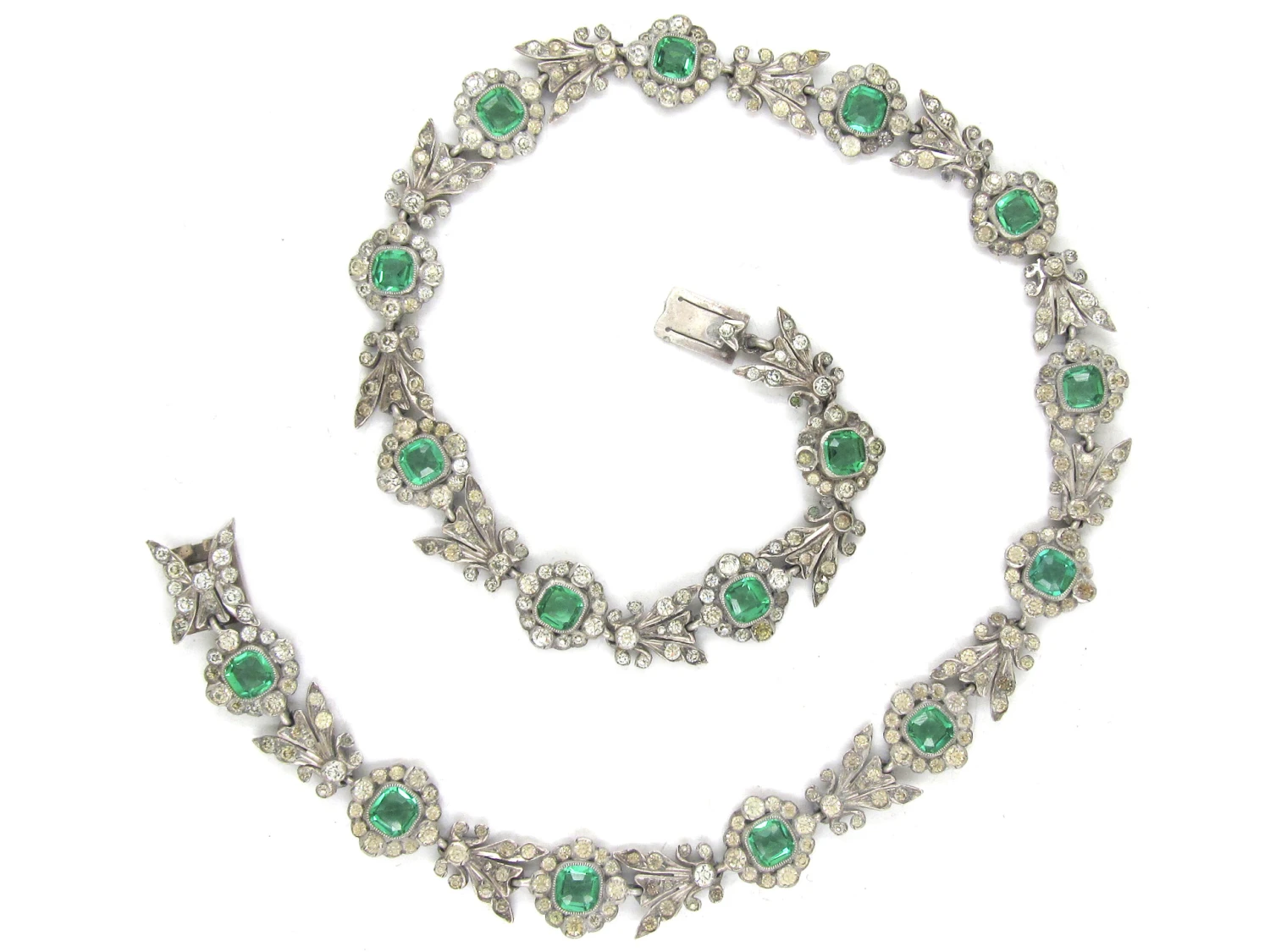
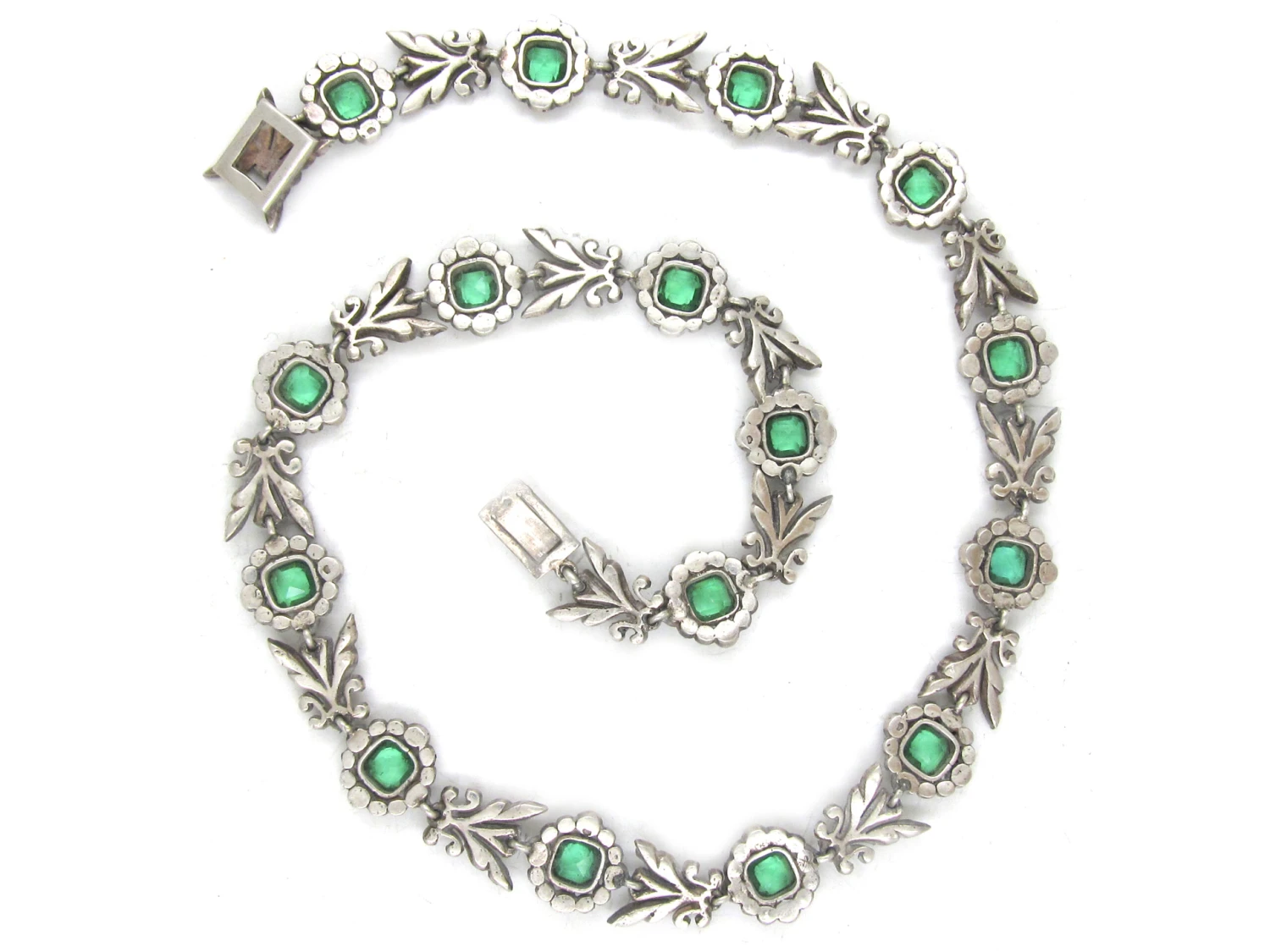
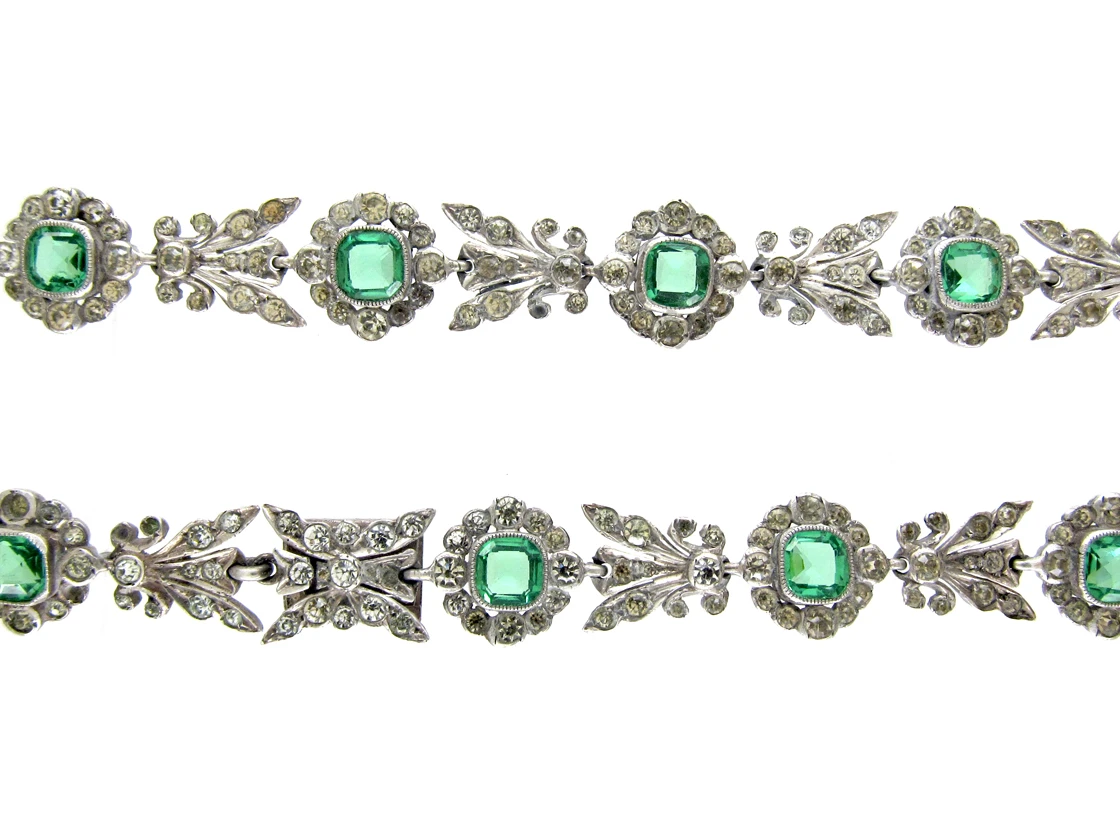
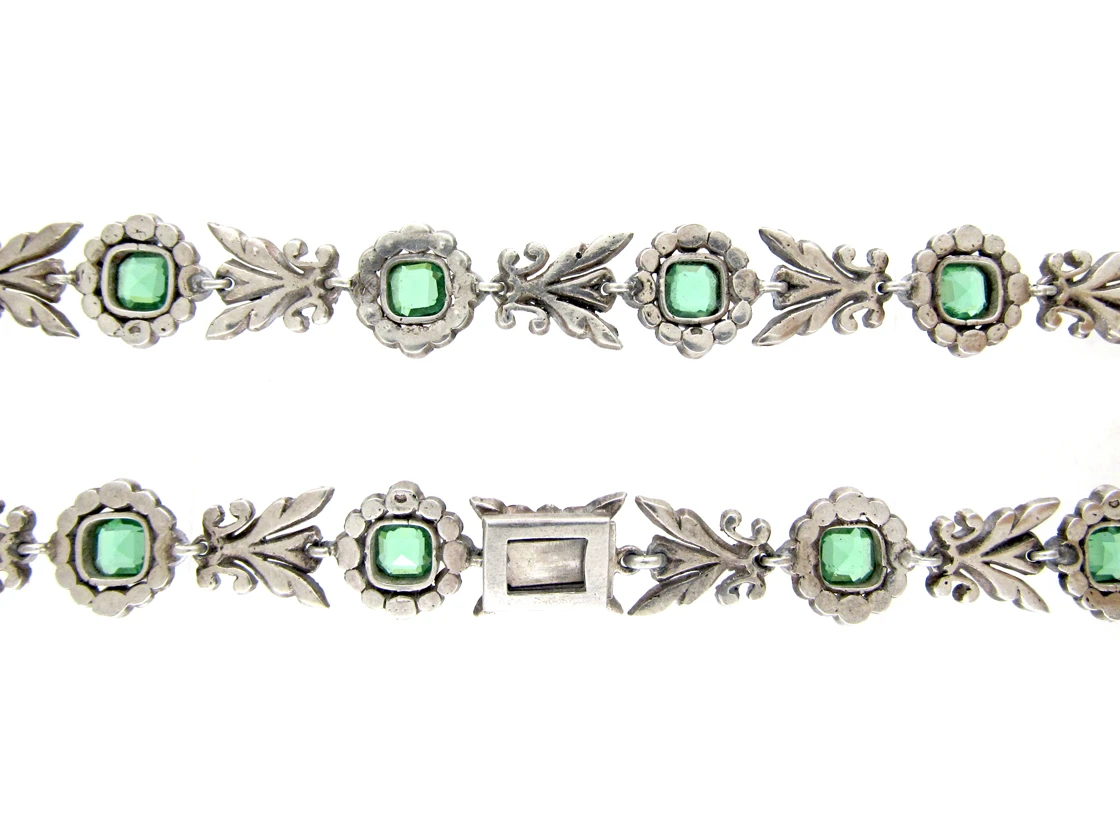

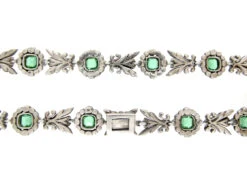
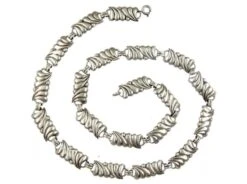
Victorian Silver & Green & White Paste Necklace
Original price was: £397.00.£98.99Current price is: £98.99.
- Shop quality, shop with us.
- Quick responses, top-notch service.
- Safeguard Your Shopping Experience
- The home of quality products.

A beautiful necklace which was made circa 1890. It may have been a special commission to copy an original diamondA precious, lustrous gemstone made of highly compressed carbon. Diamonds are one of the hardest materials known to mankind. Colours of diamonds range from colourless, yellow, orange and brown to almost black. Natural coloured (or ‘fancy’) diamonds can be extremely rare. The cut, colour, clarity and carat weight of a diamond are the criteria jewellers use… and emeraldOne of the four ‘precious’ stones. An intense, deep green is the most desirable colour for emeralds. Flaws and cloudiness (‘jardin’) are very common in emeralds, so stones are often oiled, irradiated, and dyed to improve their look. Synthetic emeralds have fewer imperfections and are hard to set apart from natural stones. Emeralds belong to the beryl… piece. This was a common practice in the VictorianJewellery made in the the Victorian era (1839-1901). era. It is silverA metallic element which is malleable and ductile, and white in colour, making it ideal for use in jewellery. It is usually mixed with copper to improve its hardness.
and studded with green and white pastes which have all been hand set.
Print Out
737F
Width just over ½ in / 1.5 cm
Austrian/ European
Small marks, possibly Austrian
Be the first to review “Victorian Silver & Green & White Paste Necklace”
Related products

Necklaces

Necklaces

Necklaces

Necklaces


Necklaces


Necklaces
Reviews
There are no reviews yet.