

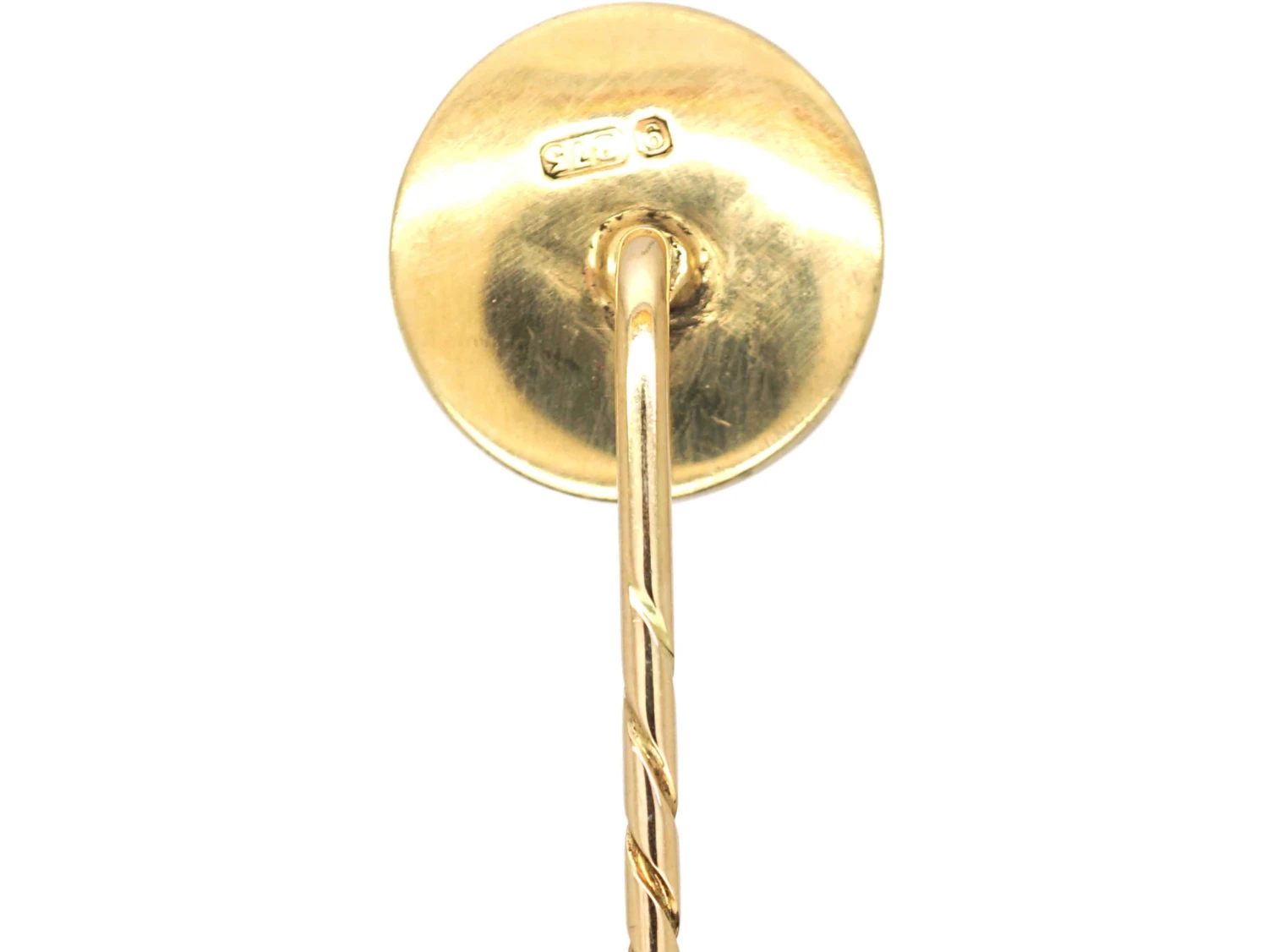


Victorian 9ct Gold Reverse Intaglio Rock Crystal Tie Pin Of A Pointer
Original price was: £321.00.£96.99Current price is: £96.99.
- Shop quality, shop with us.
- Quick responses, top-notch service.
- Safeguard Your Shopping Experience
- The home of quality products.

I love reverse intaglio crystal pieces because I find it so hard to believe that these items were carved by hand. This example is of a spaniel created with huge attention to detail. The background is mother of pearl and the mount is 9ct gold.
A reverse crystal intaglio is a rock crystal cabochon with an intaglio carved into the flat back. The intaglio was also painted realistically with oils so, that when viewed through the top, the image appears three dimensional. Finally, the back was sealed in order to preserve the painted areas. The technique originated in Belgium c.1860 and is attributed to an artist named Emile Marius Pradier. This technique was also practiced in England by Thomas Cook and his descendants who made crystals for Lambeth & Co.
Production of a reverse crystal intaglio begins with the mining and cutting of fine rock crystal from Brazil or Madagascar. A well-formed cabochon is the key to a beautifully made reverse intaglio and the tedious process of hand polishing it to perfection had to be completed before the design work could begin. A watercolour of the image was painted on the underside of the cabochon and an oil and diamond dust mixture was used along with up to 250 scribing tools to carve the design into the interior of the crystal “…the deeper the carving the more pronounced trompe l’oeil effect.” Once the carving was established the painting process began with extremely fine brushes and paint working in reverse to create incredibly detailed images.
The motifs most commonly found are sporting themes – horses, dogs, foxes and birds. This relatively secret process passed through family members, so keeping it exclusive and expectations of quality were very high. They remained in fashion until poorly made glass and plastic imitations flooded the market c. 1920s.
All our tie pins come with a stopper at the end of the pin.
Print Out
917T
Top diameter 1.5cm
English
Be the first to review “Victorian 9ct Gold Reverse Intaglio Rock Crystal Tie Pin Of A Pointer”
Related products

Men's Jewellery



Men's Jewellery


Men's Jewellery


Men's Jewellery


Men's Jewellery

Men's Jewellery
Reviews
There are no reviews yet.