
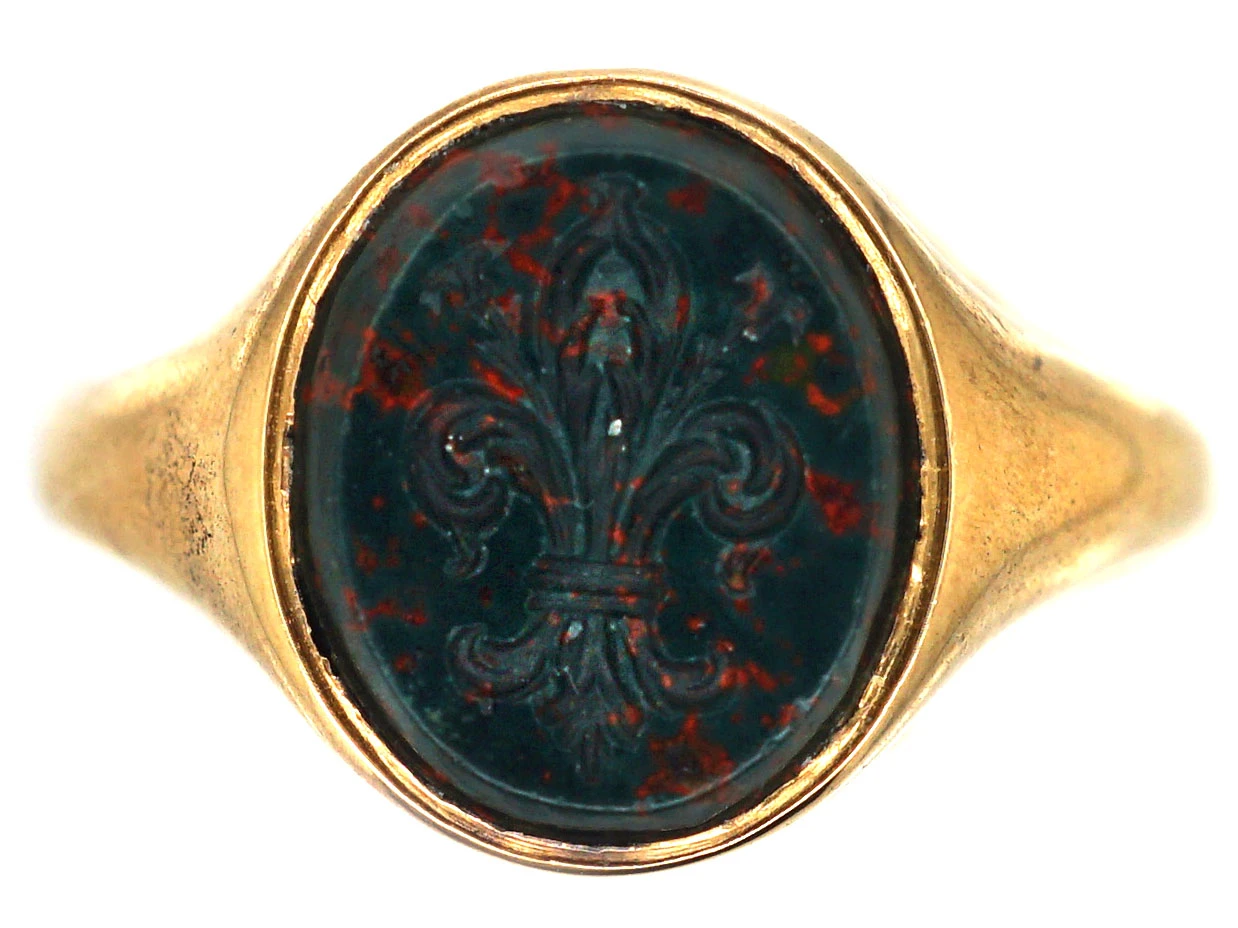
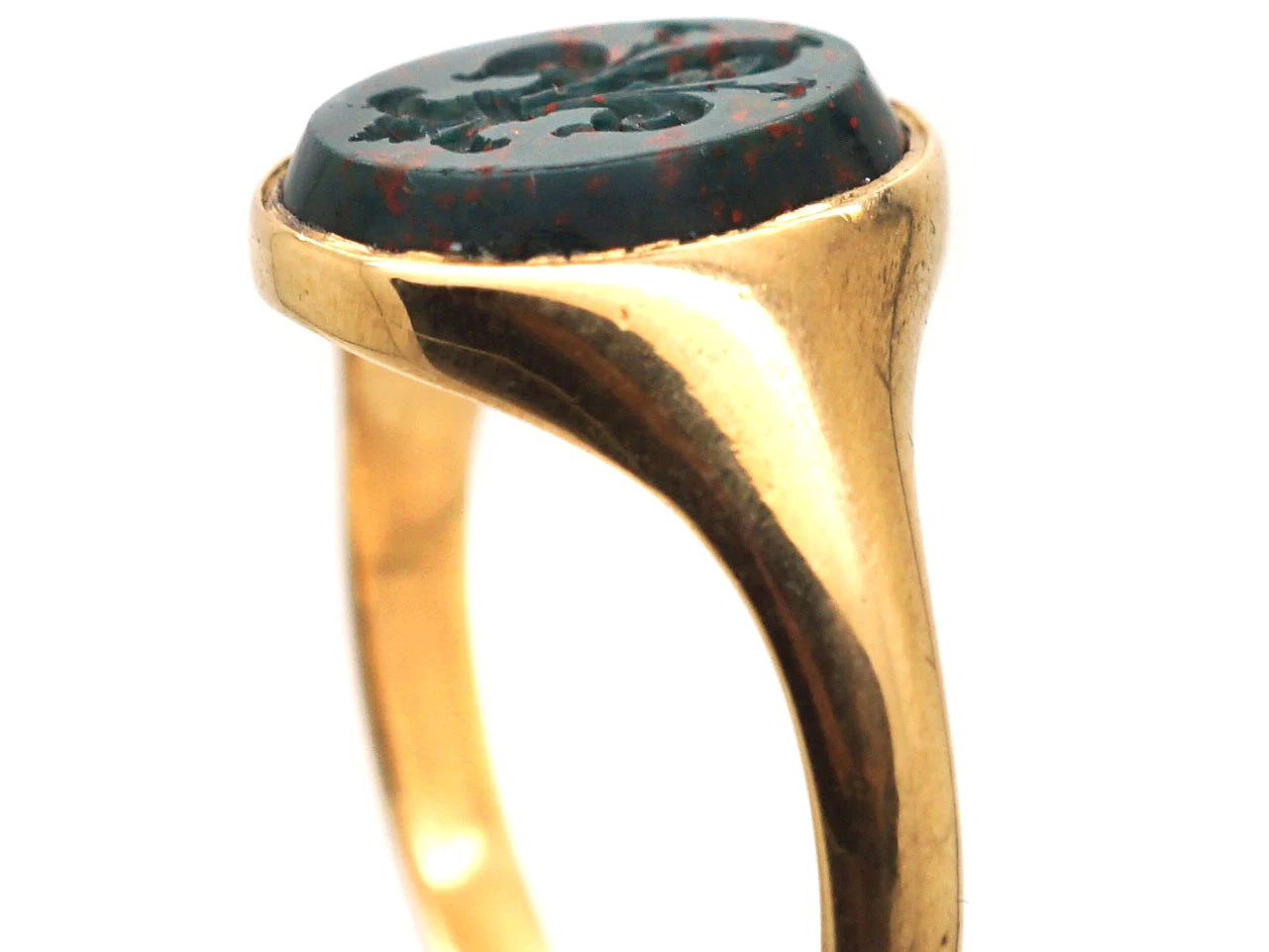
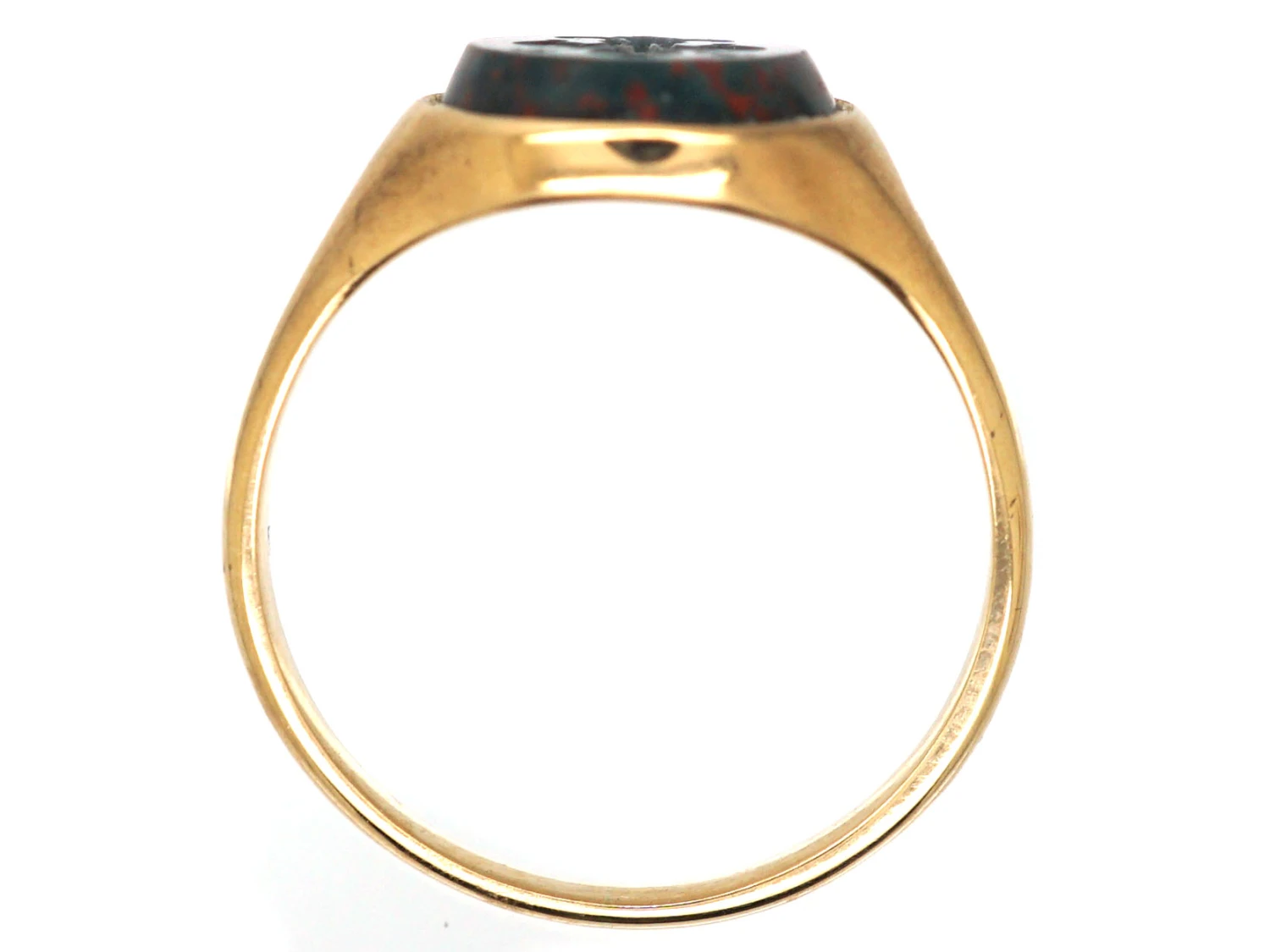
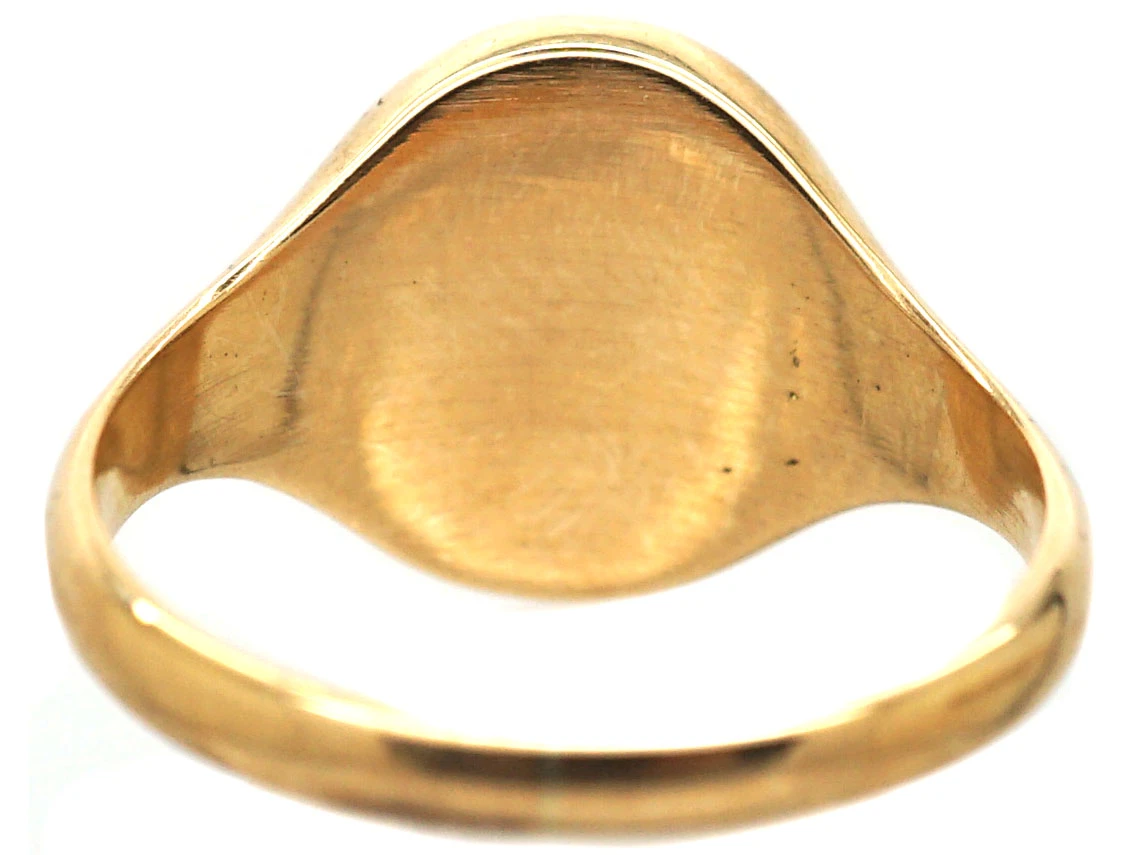
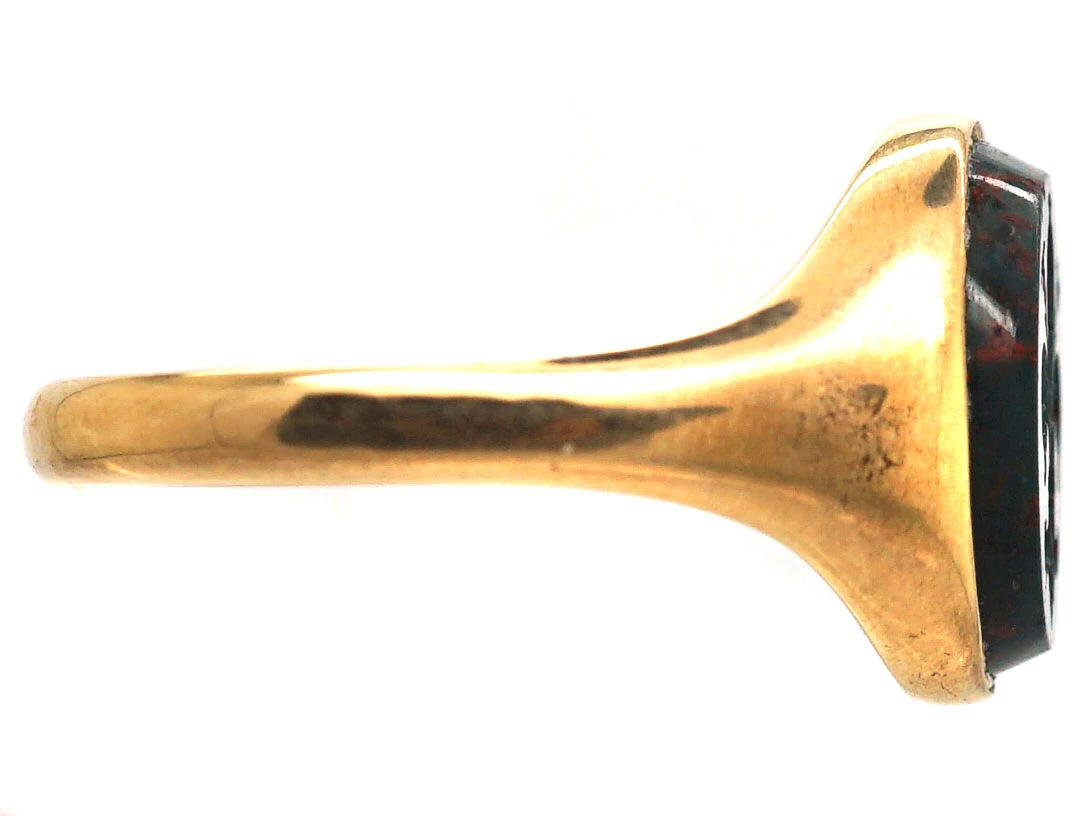

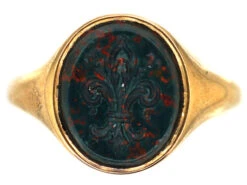
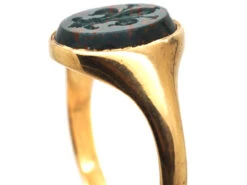
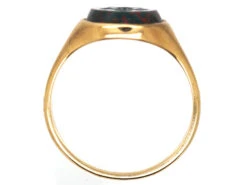
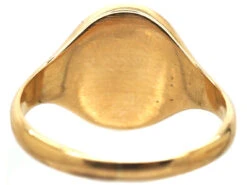
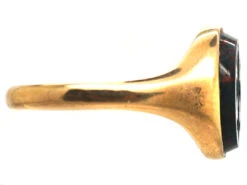
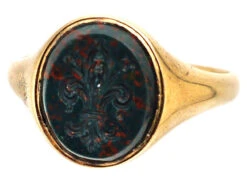
Victorian 15ct Gold Ring Set With A Bloodstone With Fleur De Lis Intaglio
Original price was: £357.00.£98.99Current price is: £98.99.
- Shop quality, shop with us.
- Quick responses, top-notch service.
- Safeguard Your Shopping Experience
- The home of quality products.

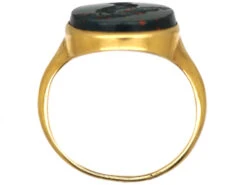
A neat 15ct62.5% pure gold (or 625 parts pure gold and 375 parts other metals). Popular during the Victorian, Edwardian and Art Deco eras but was discontinued in the mid-1930s. gold ring that was made circa 1880-1900. It has been set with a bloodstoneA dark green to dark bluish-green variety of Chalcedony that is splattered with red or brown spots that resemble blood. The extent of the marking varies depending on the stone. Spots are favoured over larger stripes and markings. that has been engraved with an intaglioAn engraved stone, the opposite of a cameo, with a recessed design cut below the surface of the stone. Intaglio designs are common for signet rings and fob seals. of a fleur de lis. The English translation of “fleur-de-lis” is “flower of the lily.” This symbol, depicting a stylised lily, has many meanings. Traditionally, it has been used to represent French royalty, and in that sense it is said to signify perfection, light and life. Legend has it that an angel presented Clovis, the Merovingian king of the Franks, with a golden lily as a symbol of his purification upon his conversion to Christianity.
Either way it is a lovely signet ringA ring with a central plaque on which one’s initials, a seal, or a crest is engraved. and sits neatly on the pinky finger.
Print Out
979X
View our Sizing Chart
English
Unmarked. 15ct gold.
- Take special care of historical jewellery
Be the first to review “Victorian 15ct Gold Ring Set With A Bloodstone With Fleur De Lis Intaglio”
Related products



Men's Jewellery


Men's Jewellery
Victorian 18ct Gold Coronet & Monogram Tie Pin That Belonged To The 4th Duke Of Wellington

Men's Jewellery


Men's Jewellery


Reviews
There are no reviews yet.