
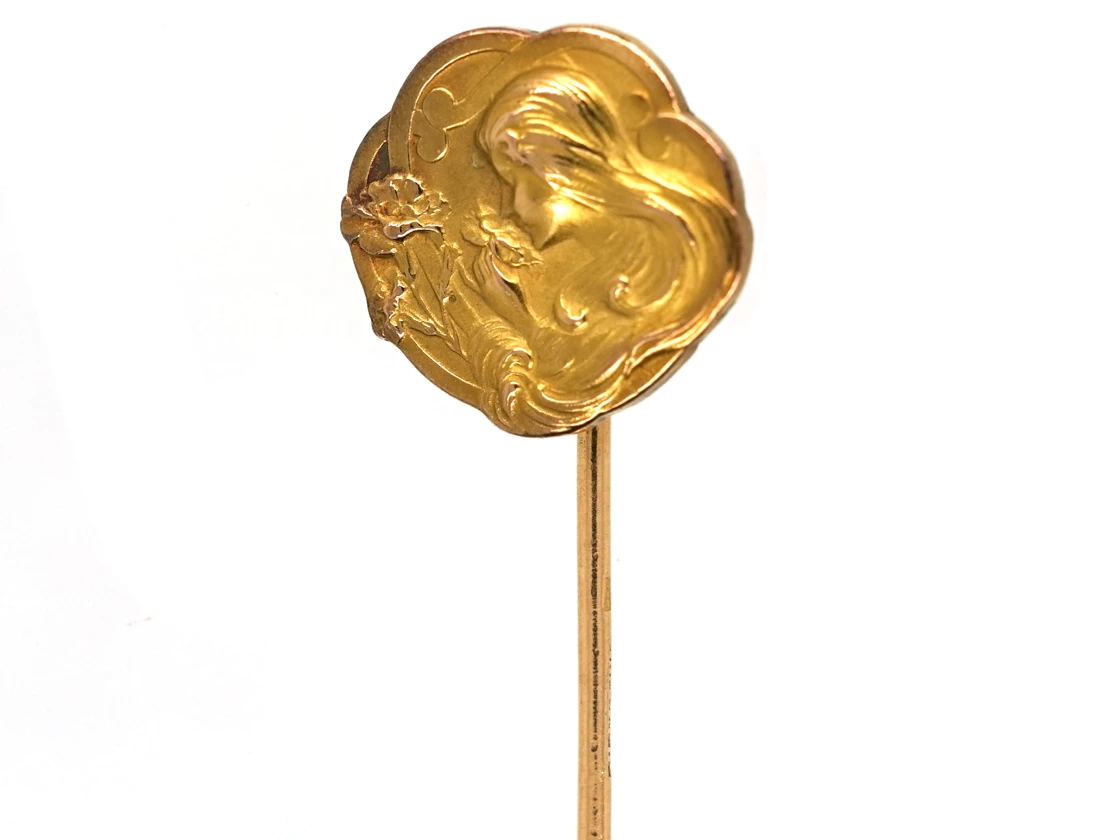

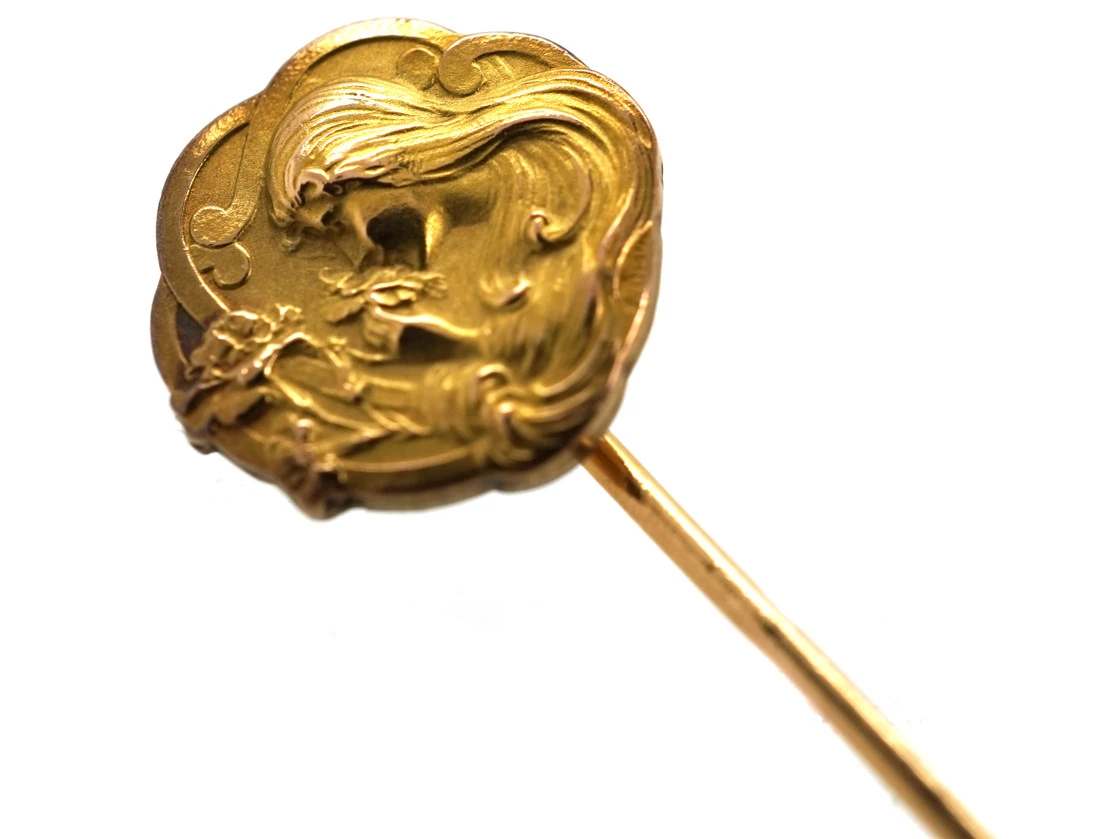
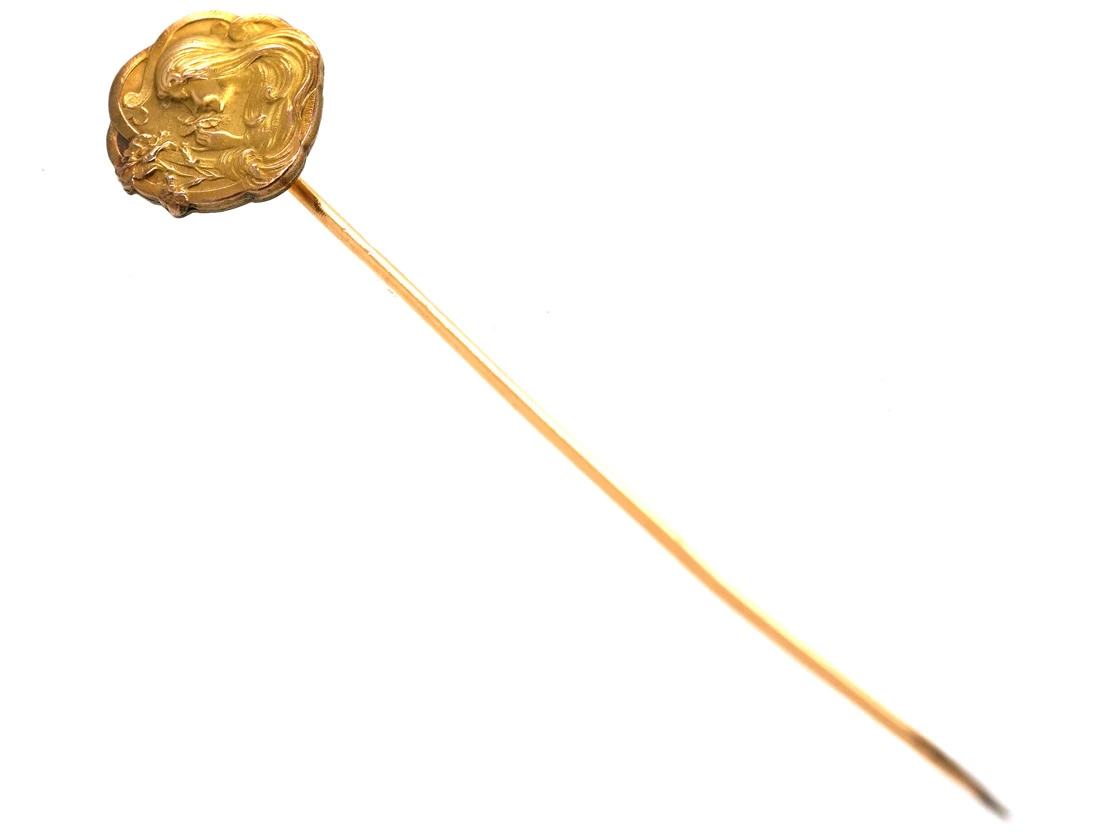
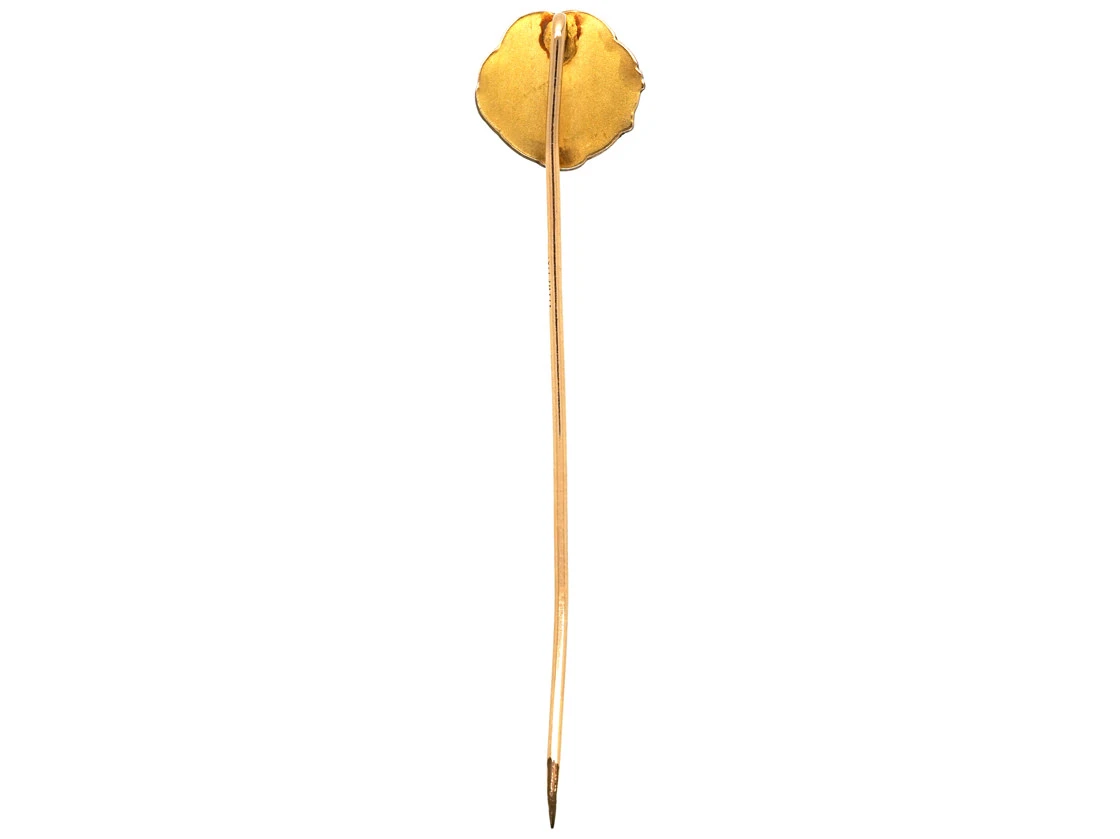


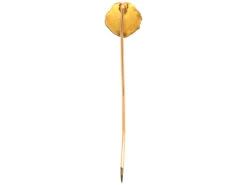
Art Nouveau Tie Pin Of A Lady
Original price was: £85.00.£59.50Current price is: £59.50.
- Shop quality, shop with us.
- Quick responses, top-notch service.
- Safeguard Your Shopping Experience
- The home of quality products.

A very pretty Art NouveauA movement within the arts, particularly jewellery, evolving out of a response to mass production and the industrial revolution (1890-1915). Jewellery of this period was heavily influenced by nature and femininity, with its sweeping lines and organic motifs. tie pin made by the process of “Fixe”. This process of high quality hot gold foilA thin metal foil placed behind a gemstone within a closed-back setting to improve its appearance. Metallic foil improves the reflectivity of certain gemstones, whilst coloured foils act as colouring agents when placed behind colourless materials, such as paste and rock crystal. The practice of foil-backing gemstones can be traced back to Minoan times (circa… laminating onto brass was first created in France in the early 19th century by a young Paris jeweller called Francois Savard. His process used an unusually thick layer of 18ct75% pure gold (or 750 parts pure gold and 250 parts other metals) or 14ct58.5% pure gold (or 585 parts pure gold to 415 parts other metals) gold foil over brass to form jewellery which would withstand long term wear and be easily mistaken for real gold. Auguste Savard took over the company in 1893. He registered the unique trade mark FIX with the authorities to identify his products as a high quality range of affordable jewellery. He engaged top rate art nouveau designers to design pieces such as Emile Dropsy, Tairac and Becker to name but a few. At the height of production the Savard FIX company employed 300 people. This tie pin is a good example of what he produced. All our tie pins come with a stopper at the end of the pin.
Print Out
40L
Length of pin 6 cm
French
“Titre fixe” marked on pin ( 18ct or 14ct gold over a metal base )
Be the first to review “Art Nouveau Tie Pin Of A Lady”
Related products


Men's Jewellery
Men's Jewellery


Men's Jewellery

Men's Jewellery


Men's Jewellery

Men's Jewellery


Men's Jewellery
Reviews
There are no reviews yet.