

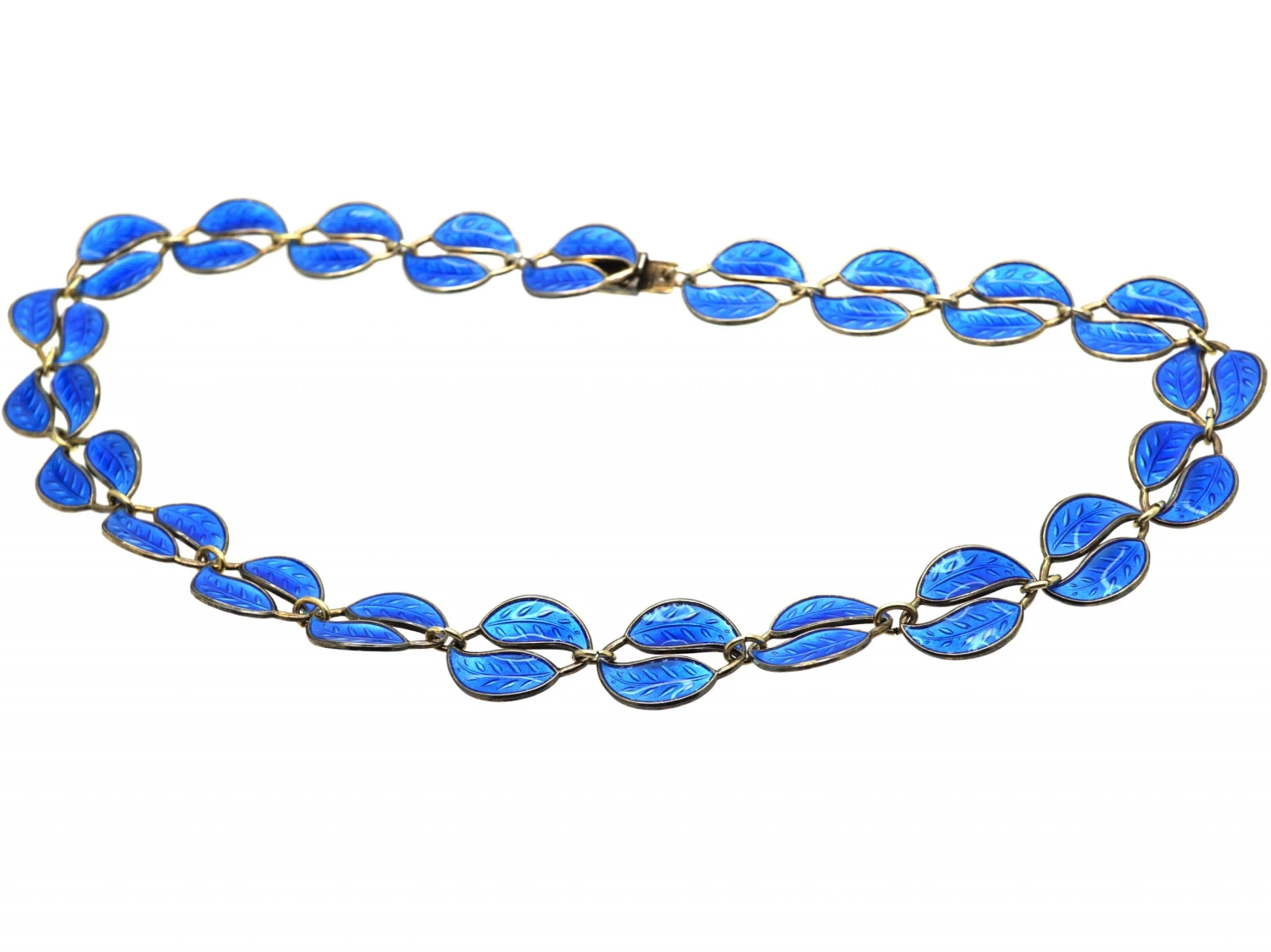


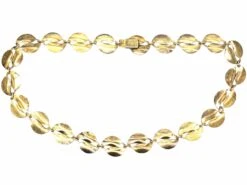
1950s Silver & Blue Enamel Double Leaf Necklace By Willy Winnaess For David Andersen
Original price was: £347.00.£97.99Current price is: £97.99.
- Shop quality, shop with us.
- Quick responses, top-notch service.
- Safeguard Your Shopping Experience
- The home of quality products.

David Andersen opened his shop in Oslo, Norway in 1876. As a designer and retailer specialising in jewellery and silverA metallic element which is malleable and ductile, and white in colour, making it ideal for use in jewellery. It is usually mixed with copper to improve its hardness.
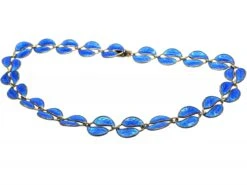
wares, Andersen’s business model closely mirrors that of Danish silversmith Georg Jensen, who was twenty-three years his junior. Jensen opened his shop in 1904. Andersen died in 1901 and his sons took over company operations and designs. Today, David-Andersen (the company’s name since the early 20th century) is well known for its mid-centuryJewellery made in the Mid-Century era (1950s). enamelled silver jewellery. This silver gilt necklace is a mid blue translucent enamelA pigmented glass-like material used in powdered form and fused onto the metal surface of a piece of jewellery. and features a continuous line of double leaves. It was designed by Willy Winnaess, who was a key designer for David Andersen. It is fully signed and markedA small hallmark or punchmark either on the inside or outside of the shank which indicates the metal is platinum, gold or silver. If the metal is gold, it could also indicate the carat, e.g. 18 carat gold. for both Willy Winnaess and David Andersen
Print Out
354S
Width 1.4cm
Norway
Marked D-A
Mark for Willy Winnaess
Sterling Norway
- Silver
Be the first to review “1950s Silver & Blue Enamel Double Leaf Necklace By Willy Winnaess For David Andersen”
Related products
Necklaces


Necklaces

Necklaces

Necklaces


Necklaces
Reviews
There are no reviews yet.